Set Free: The Gift of Forgiveness
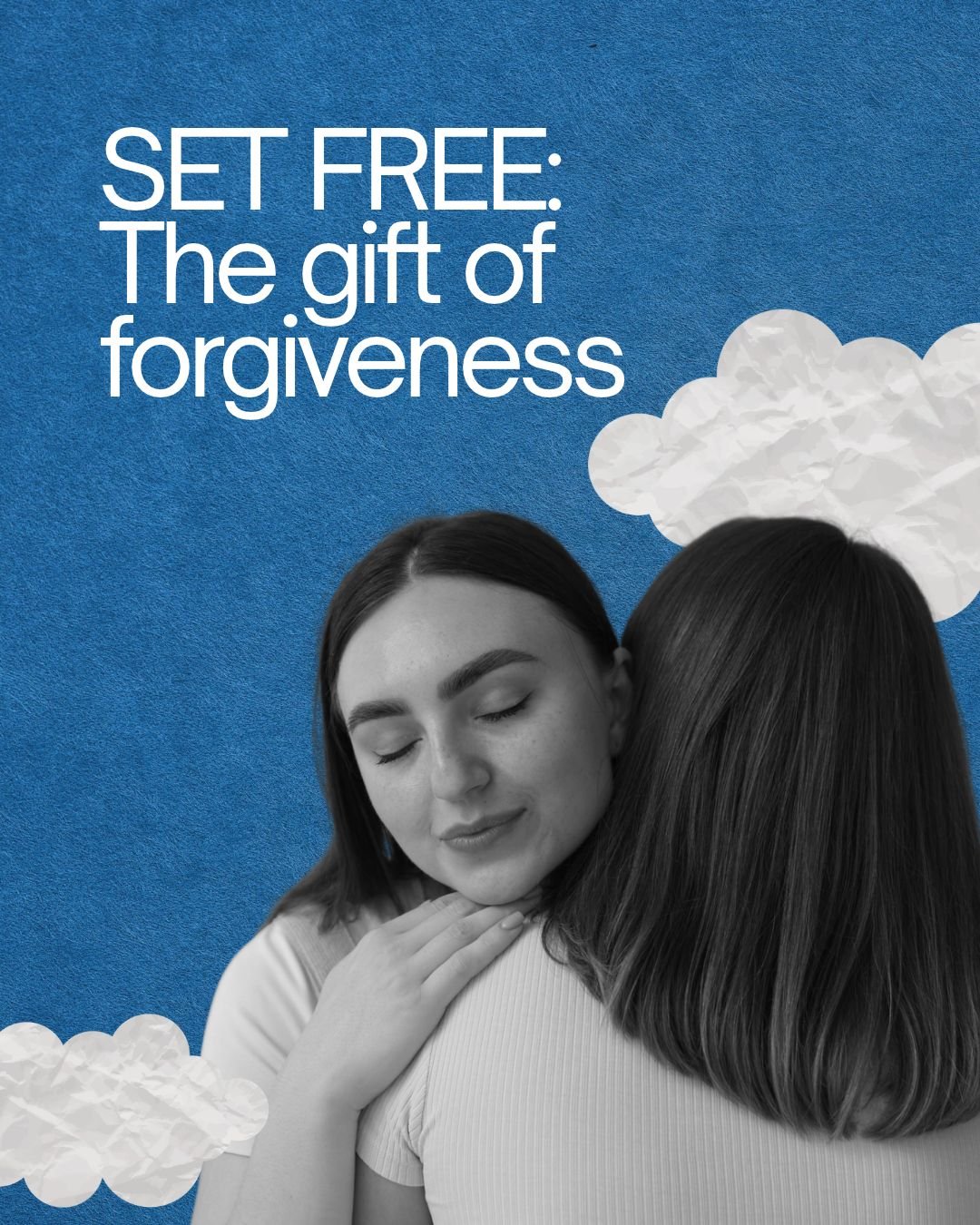
I used to think forgiveness was something you did for the other person. You know… the very Christian thing to do. Someone hurts you, you forgive, you move on. Cue inspirational music. Except real hurt doesn’t usually work like that.
Sometimes someone hurts you and you are ANGRY. Sometimes you cry until there genuinely cannot be another tear left in your body. Sometimes you scream, “Why me?” Sometimes you replay conversations in your head and think of all the things you should have said or would like to say. Preferably with God temporarily looking the other way. Just me?
During my first marriage, I think somewhere along the way I became bitter. I don’t know that it happened all at once. I think bitterness is sneaky like that. A hurt here, a disappointment there, something you swallow because you don’t want another fight, something you tell yourself you’re over when you’re clearly not. And, eventually, all those little hurts begin stacking themselves on top of one another. They get mixed in with disappointment and unfulfilled expectations until anger isn’t just something you feel anymore; it starts becoming part of who you are. That’s what scared me.
I remember looking at myself in the mirror and realizing I didn’t particularly like the person looking back at me. I didn’t want to be that type of person for my son. I was angry and it had changed me. In fact, I think some of that anger was ultimately what made me begin thinking about leaving my marriage. Whatever was happening between us was one thing, but what was happening inside me was another. And I didn’t want to become THAT woman.
Here’s the strange part. Probably six or seven years after our divorce, I saw my ex again and something was different. Nothing dramatic happened. There wasn’t some big movie moment where we embraced and the orchestra swelled. I was simply able to be in the same room with him without wanting to strangle him. I didn’t feel that familiar knot in my gut or the tears in my eyes. I remember realizing: maybe I’m healed from the pain, the disappointment, the abandonment, the deceptions… And maybe that’s when I finally understood forgiveness differently.
Forgiveness isn’t pretending something didn’t hurt and it isn’t rewriting history or saying what someone did was okay when it wasn’t. And it doesn’t necessarily mean putting someone back into the same position in your life where they can hurt you all over again. Forgiveness and reconciliation aren’t always the same thing.
Sometimes reconciliation is possible. Sometimes a boundary is wisdom. But forgiveness? Forgiveness is putting down something you were never meant to carry forever and WOW, can that thing get heavy!
Jesus talks about forgiveness A LOT which frankly is mildly inconvenient when someone has really hurt you to your core, messed up the plans and dreams you had for your life or broken apart your family. It would be much easier if He had said: “Forgive the people who deserve it” or “Forgive once they understand exactly what they did to you” or my personal favourite: “Forgive when they finally apologize properly.” But He didn’t.
Colossians 3:13 says: “Forgive as the Lord forgave you.” There’s no little asterisk after that. Unless they were really awful.
And I think I understand why a little better now. Maybe forgiveness isn’t primarily about what the other person deserves. Maybe it’s about what God doesn’t want happening inside of us because hurt that isn’t dealt with has a funny way of reproducing itself.
There’s an old saying: “Hurt people hurt people,” and it really can become a vicious cycle of pain. When pain goes unresolved, we can end up carrying it into other relationships. Angry people tend to bring anger into rooms where the original offender isn’t even present. Bitterness can spill into a new marriage, a friendship, our children, our work, all because somebody from five or ten or twenty years ago is still occupies emotional real estate they aren’t even paying rent for. Think about that!
Even outside of faith, forgiveness is increasingly understood as something that can benefit the person doing the forgiving. Letting go of resentment has been associated with greater peace, healthier relationships and reduced stress. In other words, God may have known something. Imagine that!
But here is where I think Christians sometimes get forgiveness wrong. Forgiveness does NOT mean denial. You can forgive somebody and still acknowledge: That hurt me. That was wrong. That relationship is no longer healthy for me. I love you, but you cannot have the same access to me anymore. There may even be situations where the most loving thing you can do is forgive someone from very far away.
Forgiveness doesn’t require amnesia. It requires surrender. It’s saying: God, I am tired of carrying this. I am tired of rehearsing it. I am tired of letting what they did determine who I become. I am giving You the anger, the disappointment, the injustice and (this is the really difficult one) my desire for them to finally understand how badly they hurt me. You deal with them and I’m going to deal with me. And perhaps that is where the freedom begins.
I wish I could tell you I handled everything in my life that way. I have not. There were moments when I cried every tear in my body. There were moments when I absolutely asked God, “Why me?” There were moments when I wanted justice considerably more than I wanted mercy. Looking back, I wonder if forgiveness might actually be easier than carrying hurt. Definitely NOT easier in the moment, but over a lifetime? Maybe. Because resentment requires maintenance. You have to keep remembering, replaying, prosecuting the case... keep reminding yourself why you’re entitled to be angry. Forgiveness eventually says: Enough. Not because it didn’t matter but because it mattered enough that I refuse to let it change who I am.
I don’t know what someone has done to you and I would never casually tell another person to “just forgive.” Some wounds are deep. Some are traumatic. Some require counselling, boundaries, time and a whole lot of God. But I do know what anger did to me and I know how it felt years later to stand in the same room with the person who had once represented so much pain and discover that he no longer had that kind of power over me. There was nothing left to prove, nothing left to fight about… just peace.
Maybe that’s the real power of forgiveness. It doesn’t change what happened. It changes what happens next.
And perhaps one of the greatest gifts God gives us through forgiveness isn’t freedom for the person who hurt us. It’s freedom for us.
Several books talk about forgiveness including: The Freedom and Power of Forgiveness by John MacArthur and Living Beyond Your Feelings: Controlling Emotions so they don’t control you by Joyce Meyer.
THE WORK OF FORGIVENESS
Books including The Freedom and Power of Forgiveness by John MacArthur and Living Beyond Your Feelings: Controlling Emotions So They Don’t Control You by Joyce Meyer explore forgiveness from a Christian perspective.
Psychology has also studied forgiveness extensively, with research suggesting that it can help loosen the hold that anger, resentment and past hurt have on our lives. But how do you actually get there?
TIPS FROM STEPHANIE ROURKE JACKSON, Life Coach & BE Relationship Editor
Forgiveness is rarely a single moment. It can be a process and sometimes one we have to choose more than once. Here are five practical places to start:
ACKNOWLEDGE WHAT HURT & UNDERSTAND THE EMOTIONS: Don’t minimize it or rush past it. Be honest about what happened, how it made you feel and how it may still be affecting you today. You can’t release something you haven’t acknowledged.
NOTICE WHERE THE HURT IS STILL SHOWING UP: Pay attention to your triggers. Are you replaying conversations? Carrying anger into other relationships? Reacting to something today because of something that happened years ago? Self-awareness can help you recognize where an old hurt may still have a hold on you.
MAKE THE DECISION TO LET GO: Forgiveness doesn’t necessarily begin with a feeling. Sometimes it begins with a decision: I don’t want to carry this anymore. When the anger or negative thoughts return, redirect them: Pray, journal, remind yourself of what is true. Ask God to help you release what you cannot seem to release on your own.
FORGIVE WITHOUT ABANDONING YOUR BOUNDARIES: Forgiveness does not mean what happened was okay. It doesn’t require you to forget, restore trust immediately or even reconcile with the person who hurt you. You can forgive someone and still establish boundaries. And if communicating with that person would be unhealthy or unsafe, forgiveness does not require contact.
DON’T DO THE HARD STUFF ALONE: Some hurts need more than a journal and a prayer and there’s no shame in that. Talk to someone you trust: a friend, pastor, coach or qualified counsellor or therapist. Sometimes another person can help us see what we’ve been carrying for so long that we no longer recognize its weight.
Remember: forgiveness isn’t pretending the hurt never happened. It’s deciding it doesn’t get to control what happens next